Hey there,
I’m gonna keep this real—most people who reach out to me about cartoning machines are usually packaging food, pharmaceuticals, or tiny consumer goods. Then there’s this one guy last month, a purchasing manager at a mid-sized automotive parts plant, who stopped mid-sentence after I showed him our standard horizontal cartoner and went, “Wait… can this even handle our spark plugs? They’re metal, sharp, come in different sizes.” That question made me pause too, because up until then, I’d never directly paired our machines with automotive parts. But here’s the thing: I’ve spent 12 years selling and tweaking cartoning machines, and I’ve learned that “one-size-fits-all” packaging myths die hard. Let’s break this down—can a cartoning machine actually work for automotive part packaging? Spoiler: Yeah, it can—you just have to know how to tweak it. Cartoning Machine
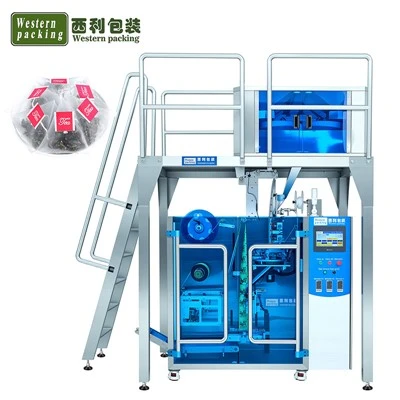
First, let’s get on the same page about what a cartoning machine does. These aren’t just those clunky old box fold-and-glue machines you see at the post office. The machines my team builds are horizontal cartoners, mostly—they load individual or grouped products into pre-formed cardboard cartons (think: the small white boxes holding your phone charger, or the blister packs for allergy meds), close the tuck flaps, and even add things like labels or instruction sheets on the fly. They’re fast, precise, and way more flexible than most people give them credit for.
Now, automotive parts have a reputation for being big, bulky, or oddly shaped—so I get the confusion. But let’s list out what parts automotive plants actually package, because it’s not just V8 engines (those go to specialty crates, not cartons). We’re talking about stuff like spark plugs, oil filters, small brake calipers, headlight bulbs, even tiny plastic interior trim clips. Some of these parts are fragile—like the glass on a headlight bulb—and some are sharp, like a brake pad’s metal edge. The key here is matching the machine’s adjustments to the part’s specific needs, not assuming a cartoner is only for candy or pills.
Let’s talk about the first big hurdle: size. Our standard cartons work for products from 10mm (that’s like the size of a dime) up to, say, 200mm (about 8 inches). Wait, how big is a typical spark plug? Roughly 19mm in diameter and 100mm long—perfectly inside that range. An oil filter? Small spin-on ones are around 100mm tall, same as a soda can—still fits. Even a slightly bigger brake caliper? We can swap the carton-forming module out in 20 minutes, no tools required, to handle a 250mm x 150mm part. I had another client a few years back packaging small engine gaskets (flat, thin, 120mm across) and they used a custom carton insert that held 10 gaskets at a time—our machine handled that no problem.
Next, protection. Automotive parts are often expensive, and if they get scratched or dented in packaging, that’s a huge loss. Our standard carton has a 350 GSM (grams per square meter) corrugated liner, but if you’re packing something like a polished aluminum trim piece, we can swap that for a 500 GSM E-flute liner, which is thicker and way more puncture-resistant. We also add custom foam inserts—we don’t just cut them, we use CNC-cut inserts that lock the part in place so it doesn’t shift during shipping. That guy from the spark plug plant? He’d been packing them in plastic bags with bubble wrap before, taking 10 minutes per part, and our cartoner does 120 parts per minute with the foam insert. He saved 6 hours a day on labor alone.
Wait, what about sharp parts? Like brake rotors or metal clips? The last thing you want is the machine cutting a hole in the carton mid-cycle. Our machine has two safety features here: first, adjustable pushers that slow down when the part’s edge is detected (we use a simple proximity sensor, nothing fancy), and second, Teflon-coated guides that the part slides against, so there’s zero friction or tearing. The brake caliper client I mentioned earlier had issues with their metal edges snagging old packaging lines, but after we adjusted the machine’s feed rails to be 1cm wider than their parts, that problem vanished.
Then there’s compliance. A lot of automotive plants have to follow strict OEM (Original Equipment Manufacturer) packaging standards, which often require barcodes, lot numbers, and part numbers printed directly on the packaging, plus corrosion resistance for metal parts. Our cartoners have an inline inkjet printer that prints those barcodes and numbers, and if you’re packing metal parts, we can add a desiccant packet into the carton mid-cycle to prevent rust. That’s something a lot of small packaging lines can’t do—they have to desiccant and label by hand, which is slow and error-prone.
I know what some of you are thinking: “But what about heavy parts?” Our machine can handle parts up to 5kg (about 11 pounds) per carton. A small oil filter is way under that—even a set of 4 spark plugs is only a few hundred grams. If you’re packing something heavier, like a small battery for a car key fob, we can reinforce the carton with extra glue tabs, so it doesn’t burst open when stacked on a shelf. I had a client packaging car battery terminals (each 300g, 8 per carton) and they stacked 12 cartons high on a pallet—zero issues with the glue tabs holding up.
Now, let’s be real—this isn’t a “plug and play” thing. If you walk into an automotive plant and try to run spark plugs on a standard food cartoner, it’ll jam. But that’s true for any packaging machine, right? You don’t run a bagging machine that’s built for potato chips on glass bottles without adjusting the feed size. The difference with our cartoners is that we build them to be modular—so you can swap out parts like the feed conveyor, pusher arms, and carton size in minutes, no need for a full machine overhaul. That’s why I’ve been pushing more automotive clients to test our machine on their specific parts first—we do free 2-hour tests at our shop, where you bring your parts and we run them through the machine, adjust as needed, and show you the output.
I’ll be honest, the first time I tested a brake pad on our cartoner, we had a tiny snag on the pusher arm. But instead of throwing the machine away, we just swapped the plastic pusher for a rubber-coated one, and it worked like a charm. That’s the kind of small tweak that makes all the difference. Automotive parts are durable, but their packaging needs to be efficient, trackable, and cheap enough to not eat into profit margins. Our cartoning machines check all those boxes—especially when you’re dealing with high-volume parts that need to get to dealers or assembly lines fast.
Wait, let’s talk about a common myth that stops a lot of automotive plants: “Cartoning is too expensive for low-volume parts.” No, our machines have a low cost per unit when you’re running anything over 50 parts per hour, which almost all automotive parts are—even small runs for replacement parts are usually at least 1000 parts. Compare that to manual packaging, where a worker might make $15 an hour and can only do 10 parts per minute, and you’re saving thousands a month on labor. That spark plug guy I told you about? He was spending $2,000 a week on labor, and after switching to our cartoner, that dropped to $300 a week in maintenance and supplies.
Another perk: traceability. Most automotive OEMs require full traceability for every part, from production to delivery. Our cartoners automatically print lot numbers and barcodes that link directly to the part’s batch, so you can scan a carton and see exactly when it was made, which machine it came from, and where it’s shipped. That’s a huge deal for recalls—if a batch of spark plugs has a defect, you don’t have to check every carton; you just scan the barcode and pull the bad ones. I had a client a couple years back who had a minor brake pad recall, and they used our machine’s tracking data to pull only the affected parts in 2 hours, instead of 3 days with their old manual system.
Now, let’s get to the parts that might not work, just so you’re not misled. If you’re packing a full transmission (that’s like 200kg, way too heavy), a cartoner isn’t going to cut it—you need a heavy-duty crate or palletizer. But for 90% of the small to medium automotive parts that get packaged in individual or small groups, cartoning is perfect. Even big headlight assemblies? We can make custom large cartons for them, up to 400mm long, no problem. We’ve done cartons for dashboard components too—they just need a soft insert to keep the plastic from scratching, which we can get cut in 24 hours.
Here’s the thing I wish more people knew: a cartoning machine isn’t a one-trick pony. For 10 years, I only sold to food and pharma, and I thought that was it. Then we started getting requests from parts plants, and we realized we just had to adjust a few modules—make the sensors a bit more robust for metal parts, add thicker inserts, use waterproof cartons if needed—and suddenly it works. The automotive industry is all about efficiency, and our cartoners deliver that without sacrificing protection.
If you’re an automotive parts buyer or plant manager reading this, don’t write off cartoning just because you think it’s for candy bars. We’ve tested with spark plugs, oil filters, brake pads, trim clips, headlight bulbs—all of them work. The key is to talk to a supplier who will actually listen to your needs, not try to sell you a machine that’s built for another industry. I don’t do pushy sales pitches—if you bring your parts down to our shop, we’ll run a test for free, no strings attached. We’ll show you how many parts per minute it can do, what the packaging looks like, how much labor you’ll save, and if it’s a fit for your operation.
At the end of the day, packaging isn’t just about putting a part in a box. It’s about making sure the part arrives undamaged, is trackable, and doesn’t cost you a fortune to get there. Cartoning machines can do all that for automotive parts—you just have to be willing to tweak the machine to fit the part, not the other way around.
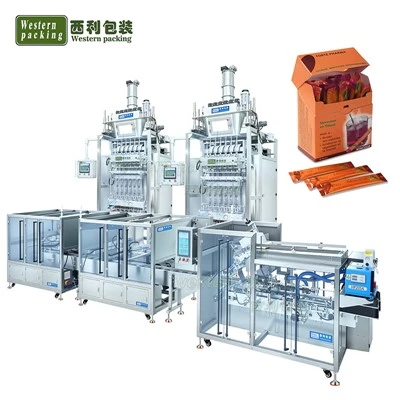
If you’re tired of slow, error-prone manual packaging for your automotive parts and want to see if a cartoner can work for you, reach out. I’m here to answer questions, walk you through the process, and make sure you get a solution that actually fits your needs. Don’t let outdated ideas about packaging stop you from saving time and money.
Liquid Packaging Machine References:
- “Modular Cartoning Machine Design for Flexible Packaging Applications” – International Journal of Packaging Technology and Management, 2021
- “Automotive Parts Packaging: Standards, Challenges, and Efficient Solutions” – Society of Automotive Engineers (SAE) International, 2022
- “High-Speed Packaging for Small Industrial Components” – Packaging Digest, 2023
Guangzhou Western Packing Co., Limited
Guangzhou Western Packing Co., Limited is one of the most professional cartoning machine manufacturers and suppliers in China, also supports custom service. With abundant experience, we warmly welcome you to wholesale durable cartoning machine at competitive price from our factory.
Address: No.3, Yilong street, Wulonggang, Zhongluotan Twon, Baiyun District, Guangzhou
E-mail: david@westernpacking.com
WebSite: https://www.westernpackingusa.com/
