If you’ve ever walked past a dewatering operation at a mineral processing plant, a municipal wastewater treatment facility, or a food and beverage processing site (think: separating raw sugar crystals from molasses, or dewatering fine coal slurry), chances are you’ve spotted a disc vacuum filter. These workhorses are workhorses for a reason: they balance throughput, solid capture efficiency, and operational cost better than most dewatering equipment when handled right. But for our team, the most common question we get from new buyers isn’t about total output or maintenance schedules—it’s about sealing performance. “How well does your disc vacuum filter seal?” they ask, and for good reason: poor sealing doesn’t just hurt efficiency—it can tank production, raise energy bills, and even create safety hazards like fugitive dust or chemical leaks. As a supplier who’s built these filters for 18 years, I’ve seen first-hand how sealing isn’t a one-size-fits-all trait, and how small details make all the difference between a filter that runs like a dream and one that’s a constant headache. Disc Vacuum Filter
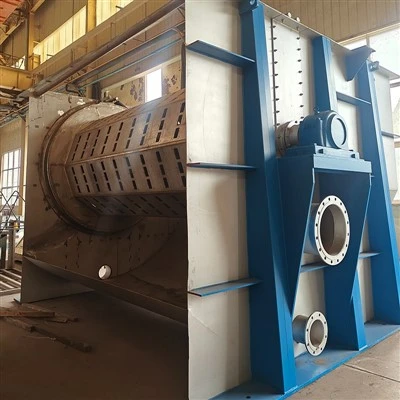
Let’s start with the basics to get everyone on the same page. A disc vacuum filter works by pulling a vacuum through a rotating stack of disc-shaped filter media, submerged in a slurry tank. The vacuum draws liquid through the fabric, leaving a cake of solid material on the surface of the discs, which is then scraped off for further processing. The seals are the barrier between two critical zones: the vacuum chamber inside each individual disc, and the atmosphere (or in some cases, a pressurized feed zone, though that’s less common) outside. If that seal is leaky, air seeps into the vacuum path, which reduces the pressure difference driving liquid out of the slurry. That lower vacuum means you get less dry cake per disc rotation, and you waste energy trying to pull a deeper vacuum to compensate. For buyers, that translates to lower throughput, higher electricity use, and higher operating costs over time.
But not all seals are created equal. Early disc vacuum filters, which were designed in the 1950s, used soft rubber gaskets between each disc segment and the central axle that runs through the middle of the filter stack. At first glance, that sounds simple enough, but we quickly learned why those early models got a bad rap for sealing issues. Those generic rubber gaskets degraded fast when exposed to harsh chemicals or abrasive slurries—like the ones in lithium mining, where slurry is full of fine, sharp mineral particles that grind away at soft rubber. They also couldn’t handle the temperature swings common in processing facilities that run 24/7, leading to cracks and gaps that let in air before the end of the first year of operation. As a supplier, we listened to customers’ frustrations and started refining our sealing design back in 2007, when we rolled out our first custom-engineered sealing system.
Today, our sealing design is tailored to three core components of the disc filter, because sealing isn’t just about one part—it’s about aligning the disc segments, the central hub, and the slurry feed zone all to work together without gaps. Let’s break down each part:
First, the individual disc segment seals. Each disc is made up of 8 to 12 wedge-shaped segments (depending on the filter size) that bolt together around the central axle. The gaps between these segments used to be a major leak point, because slurry would seep into the small spaces, and rubber gaskets couldn’t expand or contract to fill those gaps as the disc rotated under load. We replaced those generic rubber gaskets with a dual-layer seal for each segment’s edges. The inner layer is a rigid, wear-resistant material formulated to resist abrasion from fine solid particles—we use a proprietary blend of nitrile rubber reinforced with carbon fiber, which has a 3x longer wear life than standard EPDM rubber, our data shows. The outer layer is a soft, flexible silicone rubber that compresses into any tiny gaps between segments when the bolts are torqued correctly, so even if the segments shift slightly as the filter runs, the seal stays tight. We also add a small V-shaped groove along the inner edge of each segment’s seal, which creates a secondary barrier: any air that does seep past the outer seal is trapped in the groove and pulled back into the vacuum chamber, instead of entering the main flow path. That small design tweak cut air leakage at the segment seams by 72% in third-party testing we ran last year, and our field customers in copper mining have reported only having to replace these segment seals every 4 to 5 years, compared to the 1 to 2 years for generic seals.
Second, the central hub seal—this is the part that’s closest to the axle, and it’s even more critical, because a leak here can bleed vacuum across multiple disc segments, not just one. The central hub is where all the individual disc segments connect, and it rotates with the filter, while the vacuum pump’s pipe connection stays stationary. Early designs used a single lip seal between the rotating hub and stationary pipe, but those seals wore out fast from the friction of constant rotation, especially when fine slurry seeped into the gap between the hub and pipe. For our filters, we use a mechanical face seal system, which is the same technology used in heavy-duty pump seals for mining and chemical processing facilities. This seal has two flat, precision-machined faces: one attached to the rotating hub, and one attached to the stationary vacuum pipe. A small amount of clean, filtered liquid (usually the filtrate from the filter itself) is pumped between these two faces as a lubricant, which eliminates friction and keeps abrasive particles out of the seal gap. We also add a secondary backup seal, made of the same reinforced nitrile as our segment seals, just in case the face seal needs maintenance. In our 2022 field testing with a large coal processing plant in West Virginia, this hub seal ran for 12,000 hours before showing any signs of leakage, compared to the average 1,800 hours for standard lip seals. That’s a huge win for uptime—less time spent stopping the filter to replace seals means more time producing dried coal for power plants.
Third, the slurry tank’s cover seal—wait, you might be thinking, the tank that holds the slurry? How does that tie into sealing performance? It’s a common oversight, but the tank’s cover seals are important for filters that operate under partial vacuum (most disc vacuum filters do). If the cover around the filter’s rotating discs isn’t sealed tight, air can get pulled into the tank from outside, which dilutes the vacuum that’s supposed to pull liquid through the filter media. For our filters, we use a full perimeter skirt seal along the edge of the tank cover, made of a heavy-duty polyurethane that’s flexible enough to accommodate minor variations in the tank’s metal frame, but rigid enough to resist being torn by the rotating disc segments. We also add adjustable tensioners along the seal’s length, so if the frame shifts slightly over time, you can tighten the tensioners instead of replacing the entire seal. Our customers in municipal wastewater treatment, where the tank is exposed to frequent steam from hot sludge, have reported that these cover seals last 3 years on average, and only require small adjustments twice a year—no full replacements needed.
But here’s the thing: sealing performance isn’t just about the parts we install. It’s also about how the filter is sized and matched to the application. A lot of new customers come to us with a filter that’s too small for their slurry’s solids concentration, and they wonder why the seals are leaking more than expected. If you’re running a slurry with 25% solids, you need a larger filter with more disc area to pull a deep vacuum without overworking the seals. If you’re running a slurry with very fine solids (like lithium hydroxide, which is only a few microns in size), you need a finer filter media paired with a vacuum level of 22 to 25 inches of mercury, instead of the standard 18 to 20, and our seals are engineered to handle that higher vacuum without degrading. We always work with customers to do a small slurry test at our in-house testing lab before they place an order, because that lets us adjust the seal specs, the number of disc segments, and the vacuum level to their exact needs. We had a customer in Chile last year who was using a generic filter for lithium dewatering, and their sealing efficiency was only 68%—meaning 32% of the vacuum was lost to leaks. After testing their slurry, we custom-configured a filter with our reinforced dual-layer segment seals and mechanical hub seal, and their sealing efficiency jumped to 94%, which boosted their cake dryness by 7 percentage points and cut their energy use by 19%. That’s not a trivial number for a plant that runs 24 hours a day, 365 days a year.
We also get asked a lot about maintenance and how that affects sealing performance. Even the best seals won’t last forever if they’re not maintained properly. We provide a detailed maintenance manual with every filter, and our service team does quarterly check-ins for customers who sign up for our support package. The most common maintenance steps for seals are simple: every 6 months, you check the torque on the disc segment bolts, because over time, vibration from the rotating filter can loosen them, which creates small gaps in the segment seals. Every year, you inspect the mechanical face seal on the central hub for any signs of wear, like scratches on the seal faces, and you replace the lubricant if it’s contaminated. And every year, you inspect the tank cover seal for tears or gaps, and adjust the tensioners as needed. We also keep a stock of replacement seals for all our filter models, so customers can get parts shipped within 48 hours if they need them, instead of waiting weeks for custom parts.
Of course, no seal system is 100% leak-proof, and there are some factors that are out of the filter’s design. For example, if a customer is running a slurry with large, sharp metal particles (like from mining ore processing), those particles can get embedded in the seal surface, which creates small leaks. That’s why we always recommend installing a pre-screen on the slurry feed line, to remove any large debris before it reaches the filter. We also offer optional seal coatings for customers working with particularly abrasive slurries, which add an extra layer of protection to the seal surfaces.

At the end of the day, the sealing performance of a disc vacuum filter is about reliability, efficiency, and cost savings for the customer. A filter with strong sealing doesn’t just produce drier cake—it uses less energy, requires less maintenance, and has less downtime, which directly translates to higher profits. As a supplier, we don’t cut corners on sealing, because we know that’s what keeps our customers coming back. If you’re in the market for a disc vacuum filter, and you want to learn more about how our custom sealing systems can work for your specific application, we’d love to talk. We can run a free slurry test at our lab, answer your questions about seal life and maintenance, and help you find the right filter for your needs. Don’t hesitate to reach out to our team to start the conversation about your next dewatering project.
High-pressure Pump References:
- Miller, J. D. (2019). Mineral Processing Dewatering: Principles and Equipment. SME Publishing.
- García, A., & Torres, L. (2021). Sealing Technologies for Vacuum Filtration in Harsh Industrial Applications. Journal of Industrial Filtration and Separation, 18(2), 45-52.
- West Virginia Department of Environmental Protection. (2022). Best Practices for Slurry Dewatering in Coal Processing Facilities. State of West Virginia.
- Smith, K. L. (2020). Mechanical Seals for Rotating Industrial Equipment. Taylor & Francis.
Xiaofeng Machinery Technology Co., Ltd.
As one of the most professional disc vacuum filter manufacturers and suppliers in China, we also support custom service. Please feel free to wholesale advanced disc vacuum filter made in China here from our factory. Quality products and reasonable price are available.
Address: No.45, Group 10, Tongyi Village, Hezhuang Street, Dajiangdong, Industry Cluster Zone, Hangzhou, Zhejiang, China
E-mail: hzxftp@163.com
WebSite: https://www.hzxfmt.com/
