If you’ve ever stood on a manufacturing floor watching a tablet press run 24/7, you know that one tiny miscalculation in compression force can derail a whole batch of tablets. Too little force, and your tablets crumble when they reach the packaging line or fall apart in a patient’s hand. Too much force, and you might crack the active pharmaceutical ingredient (API), slow dissolution, or even damage the press itself. As a tablet press supplier, I get this pressure firsthand—our clients don’t just need a machine that makes tablets; they need one that makes consistent, reliable tablets every single time. That’s why measuring compression force isn’t just a technical step—it’s the backbone of quality control for every pharmaceutical, nutraceutical, or chemical tablet we help our customers produce. Tablet Press

Over the 12 years I’ve been working with tablet presses, I’ve seen clients skip this step or cut corners that end up costing them weeks of downtime and costly batch rejections. Last year, a small generic drug manufacturer called us in a panic because 30% of their latest batch of pain relief tablets failed dissolution testing. Turns out their old press’s force gauge was off by 15%—they’d been compressing their tablets too hard without knowing it, crushing the API into tiny particles that wouldn’t dissolve properly. We swapped out their outdated gauge for a precision load cell system, walked their team through calibration, and never had that problem again. That story stuck with me because it’s not just about selling equipment—it’s about making sure our customers understand why this measurement matters, and how to do it right.
First, let’s get clear on what compression force actually is in this context. When a tablet press compresses powder into a tablet, two main forces are at play: the upper punch pushing down on the powder from the top, and the lower punch pushing up from the bottom. The total compression force is the combined force of these two punches (or sometimes just the upper punch, depending on the press design) that packs the powder into a dense, uniform tablet. It’s measured in units like kilonewtons (kN) or pounds-force (lbf), and even a 5% variance can change everything from tablet hardness to dissolution rate to shelf life.
The most common way to measure this force is with load cells—sensors that convert mechanical force into an electrical signal that can be read in real time. These aren’t the cheap, flimsy sensors you might find in a bathroom scale; industrial tablet press load cells are calibrated to withstand thousands of compression cycles a minute, without drifting or losing accuracy. Good presses have load cells mounted directly to the punch holders—so every time the punch moves, the force is recorded as it happens, not just at the end of the compression cycle. That real-time data is gold because it lets you spot a force spike or dip the second it happens, not after you’ve made 10,000 bad tablets.
But load cells aren’t the only tool. Manual tablet hardness testers, like the Stokes Hardness Tester or the Schleuniger 6D, are often used alongside force measurements to verify that compression force translates to actual tablet quality. If you compress a tablet at 10 kN, its hardness should fall within a specific range—if it doesn’t, that’s a red flag that your force measurement is off, or that your powder blend is inconsistent (more on that later). Some smaller, batch-type presses might also use a torque sensor, which measures the torque on the press’s main camshaft to estimate force, though this is less precise than a load cell because it can be affected by press friction or wear.
Now, let’s talk about the practical steps to measure compression force correctly, because it’s not just slapping a sensor on a press and calling it good. First, calibration is non-negotiable. A load cell that’s never calibrated might read 9 kN when you’re actually applying 10 kN—so your entire force data is wrong. We recommend calibrating load cells at least every three months, or after any maintenance that involves changing punches or adjusting the press’s upper/lower punch alignment. The calibration process uses a standard reference weight (like a 10 kN test weight, traceable to national metrology standards) to adjust the sensor’s output so it matches exactly. Last year, we trained a team at a large nutraceutical manufacturer who’d been calibrating their load cells with old, uncertified weights—after proper calibration, they adjusted their compression force settings and reduced tablet hardness variance by 22%. That’s the kind of impact this step has.
Next, you need to account for variables that can throw off force measurements. The biggest one is punch wear. If your punches are scratched or bent, they don’t transfer force evenly to the powder. A punch that’s worn on one side might apply 10 kN to half the tablet and 8 kN to the other half, leading to lopsided tablets that fail hardness testing. We tell our clients to inspect punches every 50,000 compression cycles, and replace them when the surface shows scratches deeper than 0.05 mm. Another variable is powder blend density. If your powder is more humid one day (common in summer months in facilities without strict humidity control), it’s more compressible—so you might need less force to make a tablet of the same hardness. That’s why force measurements work best when paired with blend testing, not used in isolation.
Then there’s data analysis. Modern tablet presses (like the ones we manufacture) come with built-in software that records compression force for every single tablet, lets you set upper and lower force limits, and flags any tablet that falls outside those limits. This is called process analytical technology (PAT), and it’s a game-changer for batch consistency. For example, if you set a limit that tablets must be compressed between 8 and 12 kN, the software automatically ejects any tablet that falls below or above that range, so you never have to sort through bad tablets by hand. It also generates reports that you can submit to regulatory bodies like the FDA, which is critical for pharmaceutical manufacturing. I’ve had clients tell me this software cut their regulatory audit time in half because all the force data was already organized and verified.
Wait, but what about when you’re troubleshooting an existing batch that’s failing? Let’s say your tablets are too soft—should you just turn up the compression force? Not so fast. First, pull the force data from your press. If the force was consistently below your target range, that’s a clear signal to increase it. But if the force was on target and the tablets are still soft, that might be a powder issue—maybe your binder is low, or your granulation size is wrong. A client of ours once had a batch of iron tablets that were crumbling, even though their force measurements were perfect. We tested their powder blend and found the iron particles were too large, so even with the right force, they couldn’t form a cohesive tablet. That’s why combining force measurements with other quality tests is so important.
I’ve also seen a lot of confusion between “compression force” and “tablet hardness.” They’re related, but they’re not the same. Compression force is the mechanical force applied by the press; tablet hardness is the physical resistance of the finished tablet to breaking. For example, a tablet made of microcrystalline cellulose might be very hard at 10 kN, while a tablet made of lactose might need 12 kN to reach the same hardness. That’s why force measurements need to be tailored to your specific formulation, not generic. Our technical team works with every client to run a small-scale test batch first, measure force and hardness, and set a target that’s specific to their product. That way, they don’t waste material adjusting settings on a full production run.
Another tip: don’t forget the lower punch force. A lot of people only measure the upper punch force, but the lower punch is equally important for uniform tablet density. If the lower punch isn’t applying the same force as the upper punch, you’ll have a tablet that’s more dense at the top or bottom, which can lead to uneven dissolution or chipping after packaging. Modern high-speed presses measure both upper and lower punch force, and our clients rave about this feature because it eliminates that lopsided tablet problem.
Let’s talk about common mistakes people make. One big one is only measuring compression force at the start of a batch, not throughout the run. Presses wear out over time—bearings get loose, cams wear down, so force can drift as a batch goes on. If you only check force when you start, you might make 100,000 tablets that are under-compressed because your press’s bearings shifted mid-run. We recommend checking force every 2,000 tablets, or setting your software to alert you if force drifts more than 5% from your target. Another mistake is using outdated, analog force gauges. Analog gauges can have accuracy errors of up to 10%, and they don’t give you real-time data to troubleshoot issues. All our presses come with digital load cell systems that have accuracy within ±0.5%, so you can trust the numbers you’re seeing.
Now, let’s get practical for someone who’s setting up a new tablet press. First, choose a press with quality load cells and data logging capabilities. Cheap presses often cut corners on sensor quality, which will lead to inaccurate measurements and more downtime. Then, make sure you have a calibration schedule in place—write it down, assign someone to do it, and keep records. Train your team on how to interpret force data, so they don’t just see a number on a screen, but understand what it means for their tablets. And finally, pair force measurements with regular tablet quality tests: hardness, thickness, dissolution, and weight variation. Force is a tool, not a magic fix—you need to use it alongside other tests to make sure your tablets are on spec.
At the end of the day, measuring compression force is all about consistency. Whether you’re making 10,000 tablets for a clinical trial or 10 million for a commercial batch, every tablet needs to be as uniform as the last. As a tablet press supplier, our job isn’t just to sell you a machine—it’s to make sure you have the knowledge and tools to run that machine correctly. I’ve worked with small startups and large Fortune 500 companies, and the ones that prioritize compression force measurement are the ones that run smoothly, avoid batch failures, and keep their customers happy.
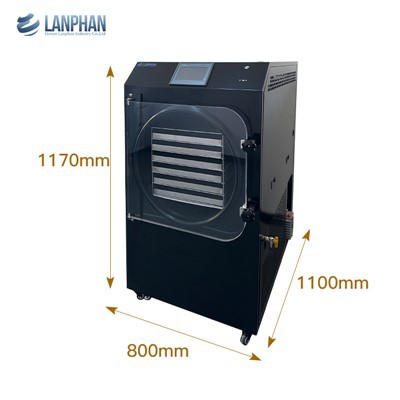
If you’re struggling with tablet consistency, worried about batch rejections, or just want to make sure your force measurements are accurate, we’re here to help. Our technical team can walk you through calibration best practices, help you set up data logging protocols, or even run a test batch on our in-house press to validate your force targets. We don’t just sell tablet presses—we partner with our clients to solve the real problems that happen on the manufacturing floor. Reach out to our team to discuss how we can tailor a solution to your specific tablet production needs.
Vertical Autoclave References
- Pharmaceutical Press. (2019). Handbook of Pharmaceutical Manufacturing Formulations: Solid Dosage Forms.
- ASTM International. (2021). Standard Test Method for Compression Force and Hardness of Pharmaceutical Tablets.
- Shargel, L., & Yu, A. B. C. (2020). Applied Biopharmaceutics and Pharmacokinetics.
- Food and Drug Administration. (2018). Process Analytical Technology (PAT) for Pharmaceutical Development, Manufacturing, and Quality Assurance Guidance for Industry.
Henan Lanphan Technology Co., Ltd.
We’re well-known as one of the leading tablet press manufacturers and suppliers in China. With abundant experience, we warmly welcome you to buy high quality tablet press for sale here from our factory. For price consultation, contact us.
Address: Room 801, East Tower, Xiyuan Square, Zhongyuan District, Zhengzhou City, Henan Province
E-mail: lanphantech@lanphan.com
WebSite: https://www.lanphantech.com/
