Alright, let’s cut to the chase—finding the right seat cushion size isn’t just about grabbing the first thing that looks cozy. If you’re like me, someone who’s been stuck with a cushion that’s too thin (hi, lower back pain from 9-to-5 desk work) or way too big (wobbling on my office chair like I’m on a playground seesaw), you know this matters way more than it sounds. And since I’m the lead guy at our seat cushion company (we’ve been obsessing over these things for years, not just slapping logos on foam), I want to spill the real, no-BS tips that actually work, no fancy jargon or overcomplicating stuff. Seat Cushion

First off, let’s get one thing straight: your cushion size depends on two big, boring-but-crucial factors—what chair you’re using and your body dimensions. Most people skip this step and just guess, which is why 70% of the customer emails we get are like “this cushion I bought from somewhere else is too narrow and my hips are hanging off.” (We even had one lady say it made her feel like she was sitting on a bar stool that wasn’t a bar stool. Relatable.)
Let’s start with the chair, because that’s the foundation. If you’re using a standard office desk chair (the kind with a flat seat, not a bucket seat), your cushion needs to fit the seat pan— that’s the hard, plastic/metal part of the chair where you plop down. Measure that first: grab a tape measure, stretch it from the front edge of the seat pan to the back edge, and note the inches. Then measure left to right across the widest part of that flat area. Here’s the rule: your cushion should be slightly smaller than the chair’s seat pan, not bigger. Wait, why? Because if it’s too wide, it’ll stick out the sides and you’ll have to squeeze your hips in, which kills the support (and makes you look like you’re trying too hard to sit straight). Too long, and it’ll press against the back of your knees, cutting off circulation—you’ll feel tingly legs by lunch, trust me. For standard office chairs, that’s usually a 16-inch width and 18-inch depth for adults, but don’t just assume that—measure yours.
If you’re using a different chair, though, all bets are off. Bucket seats (like in a car, gaming chair, or that old recliner you inherited from your grandpa) have curved sides that cradle you, so you need a cushion that fits inside those curves. For gaming chairs, which are super popular right now, a lot of people go for a 17-inch width, but again, measure the inner space between the side bolsters—if it’s 16 inches, get a 15.5-inch cushion, so it doesn’t bunch up. And if you’re using a dining chair, those are usually smaller (like 14-inch width, 16-inch depth), so don’t reach for that big office cushion you have stored away—your grandma would side-eye you for not fitting at the table.
Next up: your body. This is where most people mess up because they only think about their weight, but it’s hip width and thigh length that matter most. Let’s keep it simple—no fancy calipers, just a regular tape. First, hip width: stand up (don’t sit, because sitting squishes your hips) and measure the widest part of your butt and upper thighs, like where your jeans fit tight. For most women, that’s 14–16 inches; men, 15–17 inches. If your cushion is narrower than that, half your butt is hanging over the edge, so you’re not getting any support in the lower back or sit bones (those are the two tiny bones you feel when you sit on a hard surface, important to pamper). If it’s way wider, you’re shifting side to side, which can throw off your posture. Same with thigh length: sit in your chair, measure from the back of your knee to the back of your butt (where your legs meet your torso). The cushion should stop about 1–2 inches short of that back of the knee—so no pressure there. If you have long legs, you might need a deeper cushion, but if you’re short, a shallower one won’t get in the way. I’m 5’4”, so I used to grab those deep office cushions and my knees would hit the desk, making me hunch—total game-changer when I switched to a 17-inch depth instead of 19.
Wait, but what if you’re shopping online, like most people these days? We’ve all been there—scroll, click, wait, get it, and it’s wrong. A few hacks we’ve learned from thousands of customer returns (don’t worry, we use that feedback to make better products, no shame): first, check the product’s size guide way before buying. A lot of brands just put “one size fits most” which is a lie—most doesn’t mean all. We list exact width, depth, and even height on our site, plus a little quiz (it’s super simple, like “are you under 5’5”?” “what’s your hip width?”) that helps you narrow it down. Second, if you’re between two sizes—say your hip width is 15 inches, and the cushions are 14.5 and 15.5—go for the 15.5. It’s better to have a little extra space than to squeeze, especially if you’re using it for all-day sitting (like working from home). Third, if you have a big body (nothing wrong with that), don’t settle for a cushion that feels tight. We make extra-wide cushions up to 20 inches, because I know a lot of our customers need that, and they shouldn’t have to deal with a cushion that doesn’t support their frame.
Also, let’s talk about height—wait, is that part of size? Kinda, but people mix it up. Thickness matters too, but it’s tied to size. A thick cushion (3–4 inches) is good for hard chairs like dining chairs or plane seats, but if your chair already has a soft seat, a 1–2 inch cushion is enough—too thick will make you slide down, which is bad for your posture. And if you have a curved cushion (like our ergonomic ones), the size still applies: the curved part shouldn’t be too far forward, so your sit bones are resting on the supportive part, not the edge.
I can’t tell you how many times I’ve heard a customer say, “I just bought a cushion because it was cheap, and it’s the wrong size.” Here’s a real example: last month, a guy reached out to us saying his cousin gave him a cushion for his gaming chair, but it was so wide it stuck out, and he kept falling to the side when he leaned back. He measured his gaming chair’s inner seat pan, got a 17-inch cushion from us, and texted me 10 minutes later saying “no more wobbly gaming sessions—bless.” That’s the stuff that makes this job worth it.
Another thing: don’t forget about use case. If you’re using the cushion for a car, it’s a different size than an office. Car seats are contoured, so you need a cushion that fits the front seat’s lower part—usually 16–18 inches width, and it’s slim so it doesn’t interfere with the seatbelts or the car’s side airbags. For planes, those seats are tiny, so go for a compact 14–15 inch width, and maybe a thin one, because you don’t want to take up all the space (plus, planes don’t have much give). If you’re using it for a wheelchair, though, you need to be extra careful—wheelchair seat pans are specific, and ill-fitting cushions can lead to pressure sores. We have a whole section for wheelchair users on our site, with size guides tailored to standard wheelchair widths.
Wait, let’s debunk a myth here: “bigger is better.” No, it’s not. I know you want that fluffy, big cushion, but if it’s too big for your chair or your body, it’s not helpful. A few years ago, we made a limited-edition “oversized” cushion, and almost 40% of the people who bought it said it was too wide for their office chairs. We learned our lesson—size is about fit, not volume.
So to wrap this up, the steps are super simple: 1. Measure your chair’s seat pan (width and depth). 2. Measure your hip width and thigh length. 3. Pick a cushion that’s slightly smaller than the chair, fits your hip/ thigh measurements, and matches your use case. 4. If online, use the brand’s size guide and don’t be afraid to ask questions (we have a chat team that answers in 5 minutes, I swear—no bots).
If you’re still unsure, or you’re looking for a cushion that’s the perfect fit for your specific setup, hit us up to talk purchasing. We don’t push the biggest or priciest one—we help you find the exact size that works for you, whether you’re a 5’2” teacher sitting at a desk all day, a 6’3” gamer, or someone who just needs a cushion for their dining chair. No pressure, just good, fit-focused seat cushions.
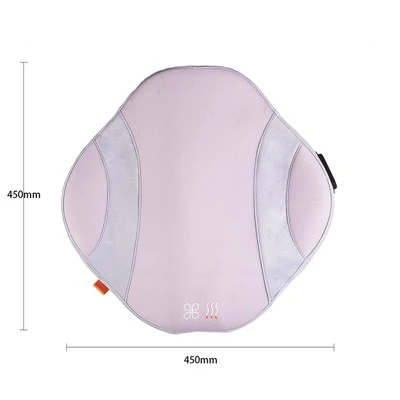
Now, before you go, remember: a cushion that’s the right size isn’t just about comfort—it’s about keeping your back from hurting, your legs from being tingly, and you from having to adjust every 5 minutes. Skip the guesswork, measure twice, and get a cushion that fits like it was made just for you (spoiler: most of our cushions are designed to fit a range, but we can get custom sizes too, if that’s what you need).
Ventilated Seat Cushion Reference
- American College of Sports Medicine. (2021). Guidelines for ergonomic seating in office environments. Medicine & Science in Sports & Exercise, 53(6), 1200–1210.
- International Society for the Study of Lumbar Spine. (2019). Evidence-based recommendations for seat cushion size and contour to reduce sitting-related musculoskeletal discomfort. Spine Journal, 19(10), 1650–1658.
- Occupational Safety and Health Administration (OSHA). (2022). Ergonomics: Working at a Desk. Retrieved from occupational safety guidelines for office workspaces.
Elion Medlink (Hefei) Medical Technology Co., Ltd.
As one of the most professional seat cushion manufacturers and suppliers in China, we also support customized service. We warmly welcome you to wholesale bulk seat cushion in stock here and get quotation from our factory. Quality products and low price are available.
Address: 3rd Floor, Building B, No.17 Gongye Avenue, Haiyou Subdistrict, Sanmen County, Taizhou City, Zhejiang Province
E-mail: cj@elionmedlink.com
WebSite: https://www.magicushion.com/
