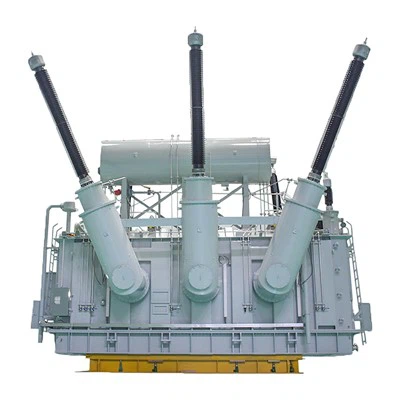
Hey there! I’m a supplier of oil-immersed transformers, and today I wanna chat about how these transformers perform at partial load. It’s a topic that’s super important for anyone thinking about using or buying these transformers, so let’s dive right in. Oil Immersed Transformer
Understanding Partial Load
First off, what do we mean by partial load? Well, an oil-immersed transformer is designed to handle a certain maximum load, which is its rated capacity. When the transformer is operating at less than this rated capacity, that’s what we call partial load. For example, if a transformer has a rated capacity of 1000 kVA and it’s currently handling a load of 300 kVA, it’s working at partial load.
Efficiency at Partial Load
One of the key things to look at when it comes to a transformer’s performance at partial load is its efficiency. Efficiency is basically how well the transformer converts electrical power from the input to the output. At partial load, the efficiency of an oil-immersed transformer changes.
You see, transformers have two main types of losses: no-load losses and load losses. No-load losses, also known as core losses, happen all the time, even when the transformer isn’t carrying any load. These losses are caused by things like eddy currents and hysteresis in the transformer’s core. Load losses, on the other hand, are proportional to the square of the load current.
At partial load, the load losses are much lower because the load current is smaller. But the no-load losses stay the same. So, the overall efficiency of the transformer depends on the balance between these two types of losses.
In general, oil-immersed transformers are designed to have their maximum efficiency at a certain partial load, usually around 50% – 60% of the rated capacity. This is because at this point, the sum of the no-load losses and the load losses is minimized. If the load is too low, the no-load losses become a larger proportion of the total losses, and the efficiency drops. If the load is too high, the load losses increase significantly, also reducing the efficiency.
Temperature Rise at Partial Load
Another important aspect of performance is the temperature rise of the transformer. The temperature of a transformer is a big deal because it affects its insulation life and overall reliability.
When a transformer is operating at partial load, the heat generated by the load losses is less. Since the load losses are a major source of heat in the transformer, the overall temperature rise is lower compared to when it’s operating at full load.
This lower temperature rise is actually a good thing. It means that the insulation in the transformer is exposed to less heat, which can extend its lifespan. Also, it reduces the risk of overheating, which can cause serious damage to the transformer.
However, it’s important to note that even at partial load, the transformer still needs to be properly cooled. Oil-immersed transformers use oil as a coolant, and the oil circulates through the transformer to carry away the heat. If the cooling system isn’t working properly, the temperature can still rise too high, even at partial load.
Voltage Regulation at Partial Load
Voltage regulation is how well a transformer can maintain a constant output voltage as the load changes. At partial load, the voltage regulation of an oil-immersed transformer is generally better than at full load.
This is because the load current is smaller at partial load, which means there’s less voltage drop across the transformer’s windings. So, the output voltage is closer to the rated voltage.
Good voltage regulation is important because many electrical devices are designed to work within a certain voltage range. If the voltage is too high or too low, it can cause problems for these devices, such as reduced performance or even damage.
Sound Level at Partial Load
The sound level of a transformer is another factor to consider. Oil-immersed transformers can make a humming sound, which is mainly caused by the vibration of the core due to the alternating magnetic field.
At partial load, the sound level is usually lower. This is because the magnetic field in the core is weaker when the load is lower, which means there’s less vibration and less noise.
This can be a big advantage, especially in applications where noise is a concern, such as in residential areas or hospitals. A quieter transformer can help to create a more comfortable environment.
Why This Matters for You
As a supplier of oil-immersed transformers, I know that understanding how these transformers perform at partial load is crucial for our customers. Whether you’re running a small business or a large industrial facility, you want a transformer that can operate efficiently and reliably, even when the load isn’t at its maximum.
By choosing an oil-immersed transformer that’s designed to perform well at partial load, you can save on energy costs, extend the lifespan of the transformer, and ensure that your electrical system operates smoothly.
Let’s Talk
If you’re in the market for an oil-immersed transformer, I’d love to have a chat with you. I can help you figure out the right transformer for your needs, taking into account factors like the expected load, the operating environment, and your budget.
Oil Immersed Transformer Don’t hesitate to reach out to me. We can discuss all the details and find the perfect solution for you.
References
- "Transformer Engineering: Design, Technology, and Diagnostics" by L. E. Zadeh and M. F. McGranaghan
- "Electrical Power Systems Quality" by Roger C. Dugan, Mark F. McGranaghan, and Surya Santoso
Nantong Yawei New Energy Technology Co., Ltd.
As one of the most professional oil immersed transformer manufacturers and suppliers in China, we’re featured by quality products and good service. Please rest assured to wholesale durable oil immersed transformer made in China here from our factory. Customized orders are welcome.
Address: Room 28-101, Building 27 and 28, No.333 Kaiyuan Avenue, Sunzhuang Subdistrict, Hai’an City, Nantong City, Jiangsu Province, China
E-mail: admin@nantongyawei.com
WebSite: https://www.nantongyawei.com/
