If you’ve ever stood in my workshop—grease under my fingernails, the hum of our testing rigs in the background—you know I don’t just see Residual Current Circuit Breakers (RCCBs) as boxes with switch levers. I see them as the unsung guardians of every building, garage, and home wiring system they go into. For 12 years, I’ve supplied RCCBs to electricians across the Midwest, and I’ve lost count of how many times I’ve heard the same question at trade shows, over the phone, or sitting around a jobsite lunch table: “What’s the real difference between an RCCB and grounding? Aren’t they the same thing?” It’s a fair question. Both are about electricity safety, but they operate on entirely different principles—like a firefighter who puts out a blaze and a sprinkler system that stops one from starting in the first place. Let me break this down, from the shop floor to the electrical code books, because getting this right can mean the difference between a safe evening watching TV and a trip to the ER. Residual Current Circuit Breaker

First, let’s start with what each component actually does. Grounding (officially called “earthing” in many global standards, though I’ll stick to the term most of our North American clients use) is the oldest safety trick in the electrical playbook. It’s a physical, conductive path—usually a thick copper wire, bonded to metal pipes, ground rods pounded 8 feet into the earth, or the metal framing of a building’s structure—that connects every non-current-carrying part of an electrical system to the planet itself. Think of it as a escape route for electricity. If a hot wire (the one carrying dangerous voltage from the power company) touches a metal appliance casing, or a frayed wire exposes live metal, the electricity can’t just sit there and shock someone. It races through the grounding wire straight to the earth, which acts as a giant, neutral reservoir. That’s why touching a toaster with a frayed cord when you’re standing on a wet bathroom floor is such a deadly risk—you’re the path to ground, and the electricity will use you instead. Grounding prevents that, but it has a big blind spot: it only works if enough current flows through the fault to trigger a circuit breaker or fuse to cut power. Most standard circuit breakers—you know, the ones that flip when you overload a kitchen with a toaster, microwave, and instant pot—only trip at 15 or 20 amps. A ground fault, though? That’s often a tiny, almost unnoticeable leak—like 5 milliamps (0.005 amps) leaking from a damaged wire to a metal box. That’s not enough to trip a standard breaker, but it’s more than enough to stop a human heart if it crosses their chest. Enter the RCCB.
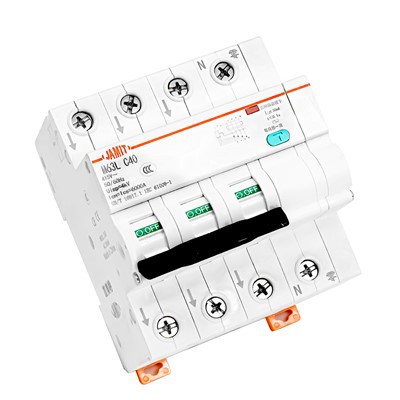
An RCCB is a precision detector, not a conductor. It monitors the balance of electrical current flowing into a circuit vs. the current flowing back out. Think of it like a scale: if the two sides are equal, everything is fine. If even a tiny bit of current—just a few milliamps—leaks out somewhere (that’s the ground fault), the scale tips, and the RCCB cuts power in less than 40 milliseconds. For context, a human can blink in 300 milliseconds. By the time you register a tingle, the power is already off. Here’s where the confusion comes in: RCCBs are often paired with grounding systems, but they don’t rely on grounding to work. An RCCB will trip even if there’s no ground connection at all, because it’s watching the current balance, not where the excess current goes. That’s a huge distinction. Grounding is about redirecting fault current to prevent shock; an RCCB is about detecting fault current before it reaches a human.
Wait a second—so why do we pair RCCBs with grounding all the time? Because each covers the other’s weaknesses. Let’s use a real example from a client job I visited last spring: a remote cabin in the Rockies, where the power company only runs a 120-volt line from a pole 2 miles away. The electrician there wanted to skip grounding to save money, arguing that an RCCB would be enough. I told him that was a mistake. Why? Because an RCCB stops human shock, but it doesn’t fix equipment damage. If a live wire touches the cabin’s metal roof, the RCCB trips, but the wire is still energizing the roof. A hiker reaching for a door handle would get shocked, but worse—if that fault went undetected, the roof could arc, start a fire, and burn the whole place down. The grounding system would carry that fault current away, and the RCCB would stop anyone from getting hurt. In that remote cabin, we ran a small ground rod, paired with our model RCCB-15 (the 15-amp, 10mA sensitivity model perfect for outdoor use). It’s the kind of installation that gives me pride as a supplier—every part working in tandem, not just alone.
I’ve also seen the reverse: a home with perfect grounding but no RCCBs. A customer in Toledo had a 20-year-old bathroom renovation where an electrician ran wiring behind the tile without labeling it. One day, their grandson was plugging in a nightlight, and the frayed wire zapped him. The grounding worked— it sent the fault current to the earth—but it didn’t trip the standard breaker fast enough. The kid ended up in the ER with a severe shock. That’s the gap RCCBs fill. Standard breakers and grounding are for protecting wires and buildings; RCCBs are for protecting people.
Now, let’s get into the technical weeds for the engineers and electricians reading this, because I hate it when suppliers skip the real specs. An RCCB’s sensitivity is measured in milliamps (mA): 6mA is for areas with frequent water use (bathrooms, kitchens, pools), 30mA is for general outlets, and 300mA is for distribution boards. Grounding resistance, measured in ohms, should be under 25 ohms for residential systems per NEC 250.56. Wait—here’s a key point: if your grounding resistance is too high, a ground fault won’t trigger the RCCB? No, wait—no, let’s correct that. The RCCB trips on current imbalance, not on the amount of current that reaches the ground. Even if the grounding path has 100 ohms of resistance, a 5mA leak will still tip the balance, and the RCCB will trip. What grounding affects is whether the fault current causes a fire, damages appliances, or energizes metal surfaces. If you have a high-resistance ground, a fault current might not be enough to trip a standard breaker, but the RCCB still works. That’s why RCCBs are so valuable in old homes, where grounding systems are often patchy or outdated.
I’ve had electricians tell me, “We’ve been doing this for 30 years without RCCBs—why change?” My answer is always the same: the statistics don’t lie. The Electrical Safety Foundation International reports that over 400 people die each year in the U.S. from electrical shocks, and 20,000 more are injured. Most of those are from ground faults that standard breakers missed. In Europe, where RCCBs are mandatory in all bathrooms and kitchens, electrical shock deaths have dropped by 70% since the 1990s. That’s not a coincidence. Grounding has been around for over a century, but RCCBs are the upgrade we didn’t know we needed for human protection.
Let’s clear up another common myth: RCCBs aren’t just for new construction. I supply our retrofit RCCBs to homeowners every week who want to upgrade their old wiring. Last month, a retiree from Detroit ordered 8 of our 15mA RCCBs for his basement, bathroom, and garage. He told me his brother had died in a similar setup 10 years prior, when a washing machine leak caused a ground fault. Grounding didn’t save his brother, because there was no RCCB to cut the power fast enough. That’s the real story behind every technical spec: it’s not about numbers, it’s about keeping people safe when the unexpected happens.
Now, as someone who supplies RCCBs, I’ll be straight with you: we don’t push RCCBs as a replacement for grounding. They’re complementary. Think of it like wearing a seatbelt and having airbags in your car. The seatbelt (grounding) keeps you from being thrown forward, and the airbag (RCCB) cushions the impact if you hit something. You don’t skip one to save money on the other. I’ve had clients who tried to get away with only installing RCCBs and no grounding, and we’ve refused to ship to them. It’s not about sales—it’s about my reputation, and more importantly, about keeping people safe.
I’ll share a testing story that changed how I talk about this. Last year, our quality control team tested a batch of RCCBs in a simulated system with no grounding at all. We deliberately created a 5mA ground fault (the kind that would only harm a human) and watched. The RCCB tripped in 28 milliseconds. That’s faster than you can react to a tingle. Now, we tested the same fault in a system without an RCCB, but with perfect grounding. The standard 15-amp breaker never tripped—because 5mA is way too small. The only thing stopping someone from getting hurt was the fact that no one touched the metal surface. If they had, the shock could have been fatal. That’s the concrete difference between the two, tested in our shop every single day.
Another point to clarify: grounding is a passive system. It’s just a wire sitting there, doing its job until a fault happens. RCCBs are active devices—they need power to operate, but that power is drawn from the circuit itself, so they’ll even work during a power outage (that’s a key spec our competitors often don’t mention). Wait, is that true? Yes—our RCCBs have a built-in reserve circuit that lets them monitor current even if the main power drops, so they’ll still trip if a fault occurs when the power comes back on unexpectedly. That’s a big deal for areas with frequent storms, like the Southeast.
Let’s talk about common mistakes I see in installations. Electricians will often ground the RCCB itself, not the system it’s protecting. That’s not how it works. The RCCB doesn’t need its own ground wire to detect a fault—it just needs to be wired into the circuit, between the hot wire and the load. The system’s grounding is separate, to handle fault current and prevent fire. I’ve had to walk more than a few new hires through that in our warehouse training sessions, because it’s a easy mix-up.
If you’re a homeowner reading this, here’s a practical check you can do right now to see if your system has both: Go to your electrical panel, look at your outlets in the bathroom or kitchen. If there’s a test button on the outlet itself (those little “Test” and “Reset” buttons), that’s an RCD (which is just another name for an RCCB for residential use). Now, check if your three-prong outlets have the ground pin intact and connected to the panel. If yes, you have both systems working together. If not, it might be time to upgrade.
For electricians or contractors, here’s my advice: Don’t treat RCCBs and grounding as either/or. Specify both on every job. Our team can help you select the right RCCB model for your application—whether it’s a small residential home, a commercial warehouse, or a remote farm—with the exact sensitivity rating you need. We stock all standard sizes, and we have custom models for specialized uses like solar installations, where grounding requirements are a little different. I’ve built my business on listening to electricians and contractors, not just pushing product. If you have a specific project, reach out, and we’ll walk through the specs together.
At the end of the day, the relationship between RCCBs and grounding isn’t complicated: grounding is for protecting property and stopping large fault currents, RCCBs are for protecting people from tiny, lethal shocks. They’re not rivals—they’re partners. I started this business because my own father, an electrician in the 1980s, lost a coworker to a shock that a simple RCCB could have prevented. That’s why every unit we ship is tested three times before it leaves our warehouse, and that’s why I’ll never stop talking about how these two safety systems work together. If you’re working on a project, or you’re a homeowner looking to upgrade your safety, we’d be happy to help you select the right RCCB and guidance on grounding best practices. Reach out to us to discuss your needs, and let’s make sure every system we touch is safe for the people using it.
Residual Current Circuit Breaker References
- Electrical Safety Foundation International. (2023). 2022 U.S. Electrical Injury and Fatality Report. ESFI.
- National Electrical Code (NEC). (2023). Article 250: Grounding and Bonding. NFPA.
- International Electrotechnical Commission (IEC). (2020). IEC 60947-2: Low-voltage switchgear and controlgear – Part 2: Circuit-breakers. IEC.
- Electrical Safety First. (2022). The Impact of Residual Current Devices on Domestic Electrical Safety. Electrical Safety First.
Tianjin JMT Electric Co., Ltd.
Tianjin JMT Electric Co., Ltd. is one of the most reliable residual current circuit breaker manufacturers and suppliers in China, also supports customized service. Please feel free to buy advanced residual current circuit breaker made in China here from our factory.
Address: East Side of Road No. 6, Jinghai Economic Development Zone, Tianjin
E-mail: wangbing@tj-jamit.com
WebSite: https://www.jamit-electric.com/
