If you’ve ever stood in a pump room on a remote offshore oil rig, or monitored a chemical processing line that runs 24/7 in a coastal refinery, you’ve probably glimpsed bimetal valve plates in action. These unassuming, precision-engineered components are the unsung workhorses of fluid systems, responsible for sealing, controlling flow, and absorbing constant impact from pressure and temperature swings. As a supplier that’s specialized in manufacturing and refining bimetal valve plate designs for 18 years, I’ve seen firsthand that a one-size-fits-all approach to these parts is a recipe for frequent breakdowns, unplanned downtime, and sky-high maintenance costs. Over the years, we’ve worked closely with operators across mining, chemical processing, marine, and power generation to optimize valve plate designs for their exact applications—learning that the best designs come from balancing material science, functional performance, and real-world operational demands. Bimetal Valve Plates
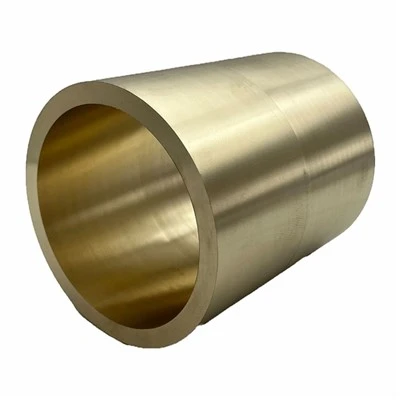
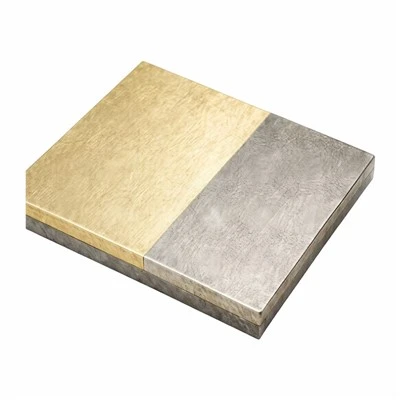
The first step to optimizing a bimetal valve plate is understanding how the “bimetal” in its name works, because that’s the core of its purpose. Unlike monolithic valve plates (made from a single metal), bimetal plates combine two distinct metals bonded metallurgically—no adhesives, no gaps—to leverage the strengths of each. Typically, this means a hard, wear-resistant facing metal for the sealing surface that interacts with the valve seat, and a tougher, more ductile base metal that can withstand the mechanical stresses of mounting, pressure cycling, and impact. But here’s the mistake many suppliers and operators make: they assume the only variable is choosing between steel and a harder alloy, without matching that combination to the specific application’s unique stressors. For example, a valve plate for a seawater pump will face completely different challenges than one for a slurry pump that moves crushed ore and chemicals.
Let’s break down that application-specific optimization process, starting with the most critical factor: operational environment. When a customer comes to us with a request, the first question we ask isn’t “what size valve do you need?” It’s “what are the operating conditions that plate will see every day?” Let’s take three common high-stakes applications to illustrate how this works.
First, consider the marine industry, specifically main cooling water pumps on container ships that cross the Atlantic. These pumps run 16 hours a day, moving cold seawater that’s full of salt, sand, and marine biofouling. The constant flow of abrasive sand and corrosive saltwater means the sealing surface of the valve plate wears down fast if it’s not made of the right material. Early on, our team tested standard chrome-plated steel for these plates, but we found that the plating would chip after just three months in service, leaving gaps that caused leakage and forced the ship into drydock. We optimized the design here by switching the facing material from hard chrome plating to a stainless steel-clad layer of Stellite 6—a cobalt-chromium alloy that’s far more resistant to both abrasion and saltwater corrosion. The base metal, meanwhile, needed to withstand the heavy vibration and pressure surges from 1,000 horsepower pumps, so we switched from standard carbon steel to a high-strength low-alloy (HSLA) steel that balances toughness and cost. The result was a valve plate that lasts 18 months on average, compared to 3 months with the original design, cutting the operator’s annual maintenance costs by 70% per pump.
Next, look at chemical processing plants that handle corrosive acids like sulfuric acid or caustic soda. In these applications, corrosion isn’t just a wear issue—it’s a safety issue. A leaking valve plate can lead to costly chemical spills, production halts, and even regulatory fines. For these customers, we don’t use standard steel at all. We optimize the bimetal design by pairing a base metal of 316L stainless steel (known for its corrosion resistance in chemical environments) with a facing layer of Hastelloy C-22, a nickel-chromium-molybdenum alloy that withstands high concentrations of aggressive acids and caustics. We also adjust the plate’s thickness and edge geometry here: in high-temperature chemical lines, thermal cycling can cause the two bonded metals to expand at different rates, leading to delamination over time. To fix that, we use a precision linear bonding process that creates a gradual transition between the base metal and facing layer, rather than a sharp boundary. That small design tweak eliminates the stress point where delamination used to start, extending the plate’s service life from 6 months to over 2 years in some cases.
Then there’s mining and mineral processing, where slurry pumps move abrasive mixtures of crushed rock, water, and chemicals. These applications are the most demanding for valve plates, because the sealing surface is subjected to constant impact from sharp, angular rock particles. Traditional bimetal plates for this sector often use a high-chromium iron facing, but we found that many designs were too brittle—when a large rock hit the plate, the facing would crack instead of deforming slightly to absorb the impact. Our optimization here was two-fold: first, we adjusted the composition of the high-chromium iron to add a small amount of nickel, which increases ductility without sacrificing wear resistance. Second, we modified the valve plate’s overall shape to have rounded edges rather than sharp, square corners. Sharp corners act as stress concentrators, so even a small impact would cause a crack to propagate. Rounded edges distribute the impact force evenly across the plate, reducing the chance of failure even when large chunks of rock pass through the pump. For a copper mining customer in Chile, this design change cut unplanned pump shutdowns from every 10 days to every 90 days, a game-changer for a process where downtime costs $150,000 an hour.
But material and geometry are only part of the optimization equation. The third key factor is matching the valve plate’s design to the specific pump’s operational cycle. Not all pumps run 24/7—some run intermittently, some start and stop dozens of times a day, and some operate at variable pressures. For example, in a municipal water treatment plant, pumps that supply potable water run on a cyclic schedule: they turn on when demand is high, turn off when it’s low, and go through pressure changes each time they start and stop. These cyclic loads cause fatigue in valve plates, even if the material is right. We optimized designs for these applications by adjusting the plate’s thickness and the size of the mounting holes. Thinner plates have less inertia, which reduces stress during pressure surges, but they’re not suitable for high-load, continuous operation. For cyclic pumps, we found that adding a small radius to the bottom of the mounting holes eliminated stress concentrations that would cause cracks to form after thousands of start-stop cycles. In contrast, for continuous-operating power plant feed pumps, we use thicker, reinforced plates with larger mounting surfaces to distribute the constant, high pressure across a wider area of the pump housing.
Another often-overlooked detail in optimization is the sealing interface between the valve plate and the valve seat. Even the best material and geometry will fail if the plate doesn’t seal properly, leading to leakage that reduces pump efficiency. We work with customers to customize the surface finish of the valve plate’s sealing face to match their valve seat material. For example, if a valve uses a cast iron seat, we finish the bimetal plate’s facing to a 16 micro-inch surface roughness—smooth enough to create a tight seal, but not so smooth that it can’t handle minor abrasion from contaminants. If the seat is made of ceramic (common in high-temperature power applications), we finish the plate to a finer 8 micro-inch roughness to ensure a uniform seal against the hard, smooth ceramic surface. We also add a small, 0.005 mm chamfer to the leading edge of the plate for applications that handle debris or solids. This chamfer helps the plate slide into the seat correctly when it closes, rather than catching on debris and failing to seal.
Quality control is the final piece of the optimization puzzle, because even a well-designed bimetal plate won’t perform as expected if the bond between the two metals is weak. We’ve seen too many operators receive “bimetal” plates that were just two pieces of metal bolted together, or bonded with an adhesive that fails after a few weeks in service. For truly optimized designs, the bond must be metallurgical—meaning the two metals are fused at the molecular level, so there’s no gap or weak point. We use a hot isostatic pressing (HIP) process for all our optimized plates, which applies high pressure and high temperature to ensure a uniform, defect-free bond across the entire surface of the plate. We also conduct 100% non-destructive testing (NDT) on every plate we ship, using ultrasonic testing to check for any voids or weak spots in the bond. That level of quality control means our optimized plates don’t just perform well in lab tests—they perform consistently in the harshest real-world conditions.
Over the years, we’ve learned that the best way to optimize bimetal valve plate design isn’t just following industry standards or default material specifications. It’s collaborating closely with each customer to map out their unique operational pain points: how often their pumps break down, what’s in the fluid they’re moving, what pressure and temperature swings they face, and what their downtime costs are. For example, when a customer approached us with a problem of valve plates failing every 6 months in their geothermal power plant, we didn’t just send them a standard bimetal plate. We visited their site, monitored their pumps for a week, and found that their fluid had not only high temperature and corrosion, but also small, abrasive silica particles from the geothermal reservoir. We adjusted the facing material to a combination of Stellite 6 and a ceramic additive, tweaked the edge geometry to resist abrasive wear, and used a stress-relieved base metal to handle the constant thermal cycling. The result? That customer’s valve plates now last over 3 years, and their annual maintenance budget for that pump line has been cut by 80%.
At the end of the day, bimetal valve plate optimization is about solving real problems for real operations. No two applications are identical, so a one-size-fits-all design will always fall short. If you’re dealing with frequent valve plate failures, unplanned downtime, or maintenance costs that are eating into your operational budget, we can help you customize a bimetal valve plate design that’s tailored exactly to your application. Whether you work in marine, chemical processing, mining, power generation, or municipal water, our team has the material science expertise and real-world field experience to optimize your valve plates for longer life, better performance, and lower total cost of ownership. To discuss your specific needs and see how we can help, reach out to our team to start a conversation about your application challenges.
Bimetal Bushings References
- ASME B16.27, Valves for Use in Petroleum and Related Industries, American Society of Mechanical Engineers, 2020.
- Shackelford, J.F., Introduction to Materials Science for Engineers, 8th Edition, Pearson, 2015.
- Nelias, D., et al., “Wear and Corrosion Performance of Bimetallic Components for Fluid Handling Applications,” Wear, Vol. 271, No. 9-10, 2011, pp. 1723-1732.
- American Petroleum Institute (API) 675, Positive Displacement Pumps—Plunger and Piston Pumps, 5th Edition, 2014.
- Kalpakjian, S., and Schmid, S.R., Manufacturing Processes for Engineering Materials, 7th Edition, Pearson, 2017.
Qingzhou Baiyun Anti-friction Products Co., Ltd.
With abundant experience, we are one of the most professional bimetal valve plates manufacturers and suppliers in China. Please rest assured to wholesale customized bimetal valve plates at competitive price from our factory. Welcome to contact us for quotation.
Address: Linglongshan North Road (south of the railway bridge), Economic Development Zone, Qingzhou City, Weifang City, Shandong Province
E-mail: byantifriction@gmail.com
WebSite: https://www.baiyunbimetal.com/
