Hey everyone, let’s cut to the chase—if you’re in the power gear game, you’ve probably wondered at some point: can a Tan Delta tester actually work for power transformers? Full transparency here, I’m on the sales side for these testers, but I’m not here to pitch a hard sell right off the bat. I’m here to talk real, on-the-ground stuff, because I’ve seen way too many electricians and maintenance teams waste time on guesswork when it comes to keeping transformers running. Let’s break this down like we’re chatting over a coffee after a long site call. Tan Delta Tester
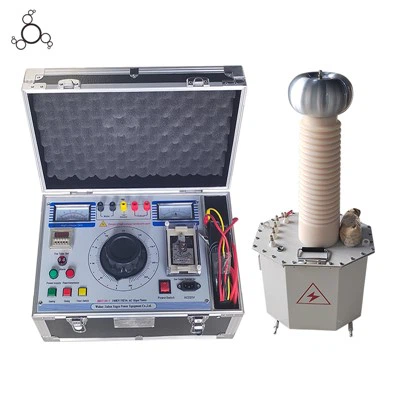
First, let’s make sure we’re all on the same page about what a Tan Delta tester even does. For anyone who’s new: Tan Delta (that’s short for Tangent Delta, if we wanna get technical) is basically a way to measure the “loss angle” in insulating materials. Insulation is non-negotiable for transformers—if that fails, you’ve got a massive outage, maybe even a fire, and that’s a whole headache no one needs. The tester applies a low-voltage AC signal (usually between 1kV and 10kV, depending on the model) to the transformer’s insulation, then measures how much the current lags behind the voltage. That lag difference translates to a value called tan δ—pronounced “tan delta.” If the insulation is good, the tan delta number is low. If it’s bad, like if there’s moisture, dirt, or insulation breakdown, the number creeps way up.
Now, the big question: can this thing work for transformers? Short answer? Absolutely, but not just plug-and-play—you gotta know how to use it right, which is where most folks mess up. I’ve had customers call me panicking because their first test on a transformer gave a weirdly high tan delta, and turns out they just tested it without draining the oil first, or didn’t account for the transformer’s tap changer being in a weird position. Let’s get into the actual use cases, because that’s where the rubber meets the road.
First up, routine maintenance. Most utility companies and industrial plants do annual (or sometimes semi-annual) testing on their power transformers, and tan delta is a staple here. Why? Because it’s super sensitive to gradual insulation degradation. Like, say a transformer’s been sitting outside for 10 years, taking in humidity every rainy season. Moisture gets into the cellulose paper insulation inside the windings, and that raises the tan delta. You can’t see moisture just by looking at the transformer, but a good Tan Delta tester will pick that up before it leads to a short circuit. I had a customer last year—they run a distribution substation for a mid-sized city—who tested their 15MVA transformer with one of our testers, and the tan delta was at 0.8% when the manufacturer’s limit is 0.5%. They pulled the transformer apart, found a small moisture leak in the sealing gasket, fixed it, and avoided a $200k outage. That’s the kind of win tan delta gives you.
Then there’s troubleshooting. If a transformer’s acting up—like tripping breakers or making weird humming noises—tan delta can help you track down the root cause way faster than other tests. I remember a plant manager hit me up a while back because their main step-up transformer was spitting errors, and they thought it was the windings, but winding resistance tests came back normal. We sent a team (wait, no, full disclosure—we’re a tester supplier, not field techs, but we walk customers through setup step-by-step) and they used our Tan Delta tester on the high- and low-voltage windings, and found that the lead insulation between the tap changer and the winding had partial breakdown, which was driving up the tan delta. Without that test, they would’ve replaced the whole transformer instead of just the faulty lead—saved them another $100k.
Wait, but let’s be real—there are limits. No tester is perfect, and tan delta isn’t a one-size-fits-all for every transformer. For example, really large, high-voltage transformers (like 500kV ones) with massive winding capacitances? Sometimes the stray capacitance from the winding itself can throw off the tan delta reading if you don’t compensate for it. A lot of cheap testers out there don’t have built-in compensation for that, which is why I always tell customers to splurge on a tester that can do automatic stray capacitance correction—we include that on all our models, by the way. Also, you can’t use tan delta on a live transformer, right? Because it’s a low-voltage test, so you gotta de-energize the unit, lock it out, tag it, follow all safety protocols. That’s a non-negotiable, no matter what tester you use.
Another thing: aging transformers. A lot of fleets have transformers that are 20, 30, even 40 years old. These are the ones that are most at risk, and tan delta is way better than other tests at picking up early-stage aging—like when the cellulose insulation starts to break down chemically, not just from moisture. I’ve had customers tell me that oil tests only flagged issues when the insulation was already 90% gone, but tan delta caught it years prior. That’s because oil tests sample a tiny bit of oil, but tan delta tests the entire insulation system, so it’s more holistic.
But wait, I need to call out a common mistake people make: comparing tan delta values across different transformers. A 100kVA distribution transformer will have a way different baseline tan delta than a 500MVA power transformer. So you can’t take a number from a small unit and expect the same limit for a big one. You always use the manufacturer’s specified limit for that exact model, or use industry standards like IEEE 62, which lays out the test procedures and acceptable values for transformers. That’s where a good Tan Delta tester helps too—our units have pre-loaded standard limit charts, so you don’t even have to memorize the numbers.
Let’s talk about what makes a Tan Delta tester good for transformers, because not all are created equal. For transformers, you need a tester that can handle high test voltages—like up to 10kV, because lower voltages (like 1kV) aren’t sensitive enough for thick insulation in big power units. Also, it needs to be portable, because you’re testing transformers in substations, sometimes in tight spots with rough ground. Our testers are lightweight, fit in a tool bag, have a big digital screen that’s easy to read in sunlight, and store up to 100 test results so you can track trends over time. Trends are huge, by the way—one high tan delta reading might not mean anything, but if it goes up 0.2% every year, that’s a red flag you need to address.
Oh, and don’t sleep on the difference between tan delta on oil vs. the whole transformer. A lot of people confuse “tan delta of insulating oil” with “tan delta of the transformer insulation system.” Oil tan delta is a separate test, just for the oil sample, while the transformer tan delta test tests all the insulation: oil, paper, pressboard, the works. The transformer test is way more useful for overall transformer health, which is why our customers almost always use the full transformer test.
Wait, let’s cover a case where tan delta might not be the best? Like, if you have a transformer that’s already completely failed, and you just need to diagnose why—maybe a partial discharge test is better, but for proactive maintenance, tan delta is unbeatable. It’s cheap, fast, and gives you actionable data without taking the transformer out of service for days. I’ve seen teams test a transformer in the morning, fix a small issue, and have it back online by lunch, which is way better than sending it to a shop for a week.
Let me be real here, as someone who sells these testers: I don’t recommend a Tan Delta tester for every single transformer scenario. If you’re testing a tiny, portable transformer for a generator, you might get away with a cheaper unit, but for power transformers that serve entire facilities or neighborhoods, you need a reliable, calibrated tester that can handle the high voltages and compensate for stray capacitance. Also, make sure whoever’s running the test is trained on how to set it up—crossing the leads wrong will give garbage readings, no matter how good the tester is.
Here’s the thing about power transformers: they’re the unsung heroes of the grid. If one goes down, it’s not just an outage for a few hours—it can disrupt manufacturing, hospitals, traffic lights, even water treatment plants. So catching small issues early is way smarter than paying for a massive emergency repair or replacement. A Tan Delta tester is one of the most cost-effective tools you can have in your maintenance kit for that.
Now, if you’re reading this and thinking, “Okay, I need to get one of these, but I don’t know which model fits my transformer fleet,” or you’ve been having trouble with your current test results and want a second opinion, feel free to reach out. We work with utilities, industrial plants, and electrical contracting teams all over, and we can help you pick the right tester for your specific needs, plus walk you through setup, safety protocols, and how to read the results correctly. No hard sell, no pushy reps—just people who know their stuff because we use these testers too, and we’ve seen firsthand how they save our customers time and money.
Wait, let’s circle back to make sure I didn’t skip anything. Can a Tan Delta tester be used for power transformers? The answer is a resounding yes—when used properly, with the right model, and paired with good maintenance practices. It’s not a magic wand, but it’s one of the best tools out there for assessing the insulation health of your transformers before a catastrophic failure happens. I’ve seen too many customers ignore tan delta tests, end up with a transformer blowing, and kick themselves for not investing a few hundred bucks in a tester earlier.

So if you’re tired of playing guessing games with your transformer fleet, and you want a way to catch issues early, a Tan Delta tester is worth considering. Don’t go for the cheapest one you find on Amazon, though—get a unit designed specifically for power transformers, with the right voltage range, compensation features, and data storage. And if you need help figuring out what that looks like for you, hit us up to talk procurement and walk through your needs.
Transformer Turns Ratio Tester References
- IEEE Standard for Field Testing of Electric Power Apparatus (IEEE Std 62-2017)
- Power Transformer Maintenance: A Practical Guide (Enerdex, 2021)
- Tan Delta Testing for Insulation Assessment in High-Voltage Equipment (International Council on Large Electric Systems [CIGRE], Technical Brochure 782, 2019)
- Maintenance, Testing, and Repair of Power Transformers (Alan J. Schwab, 2020)
Wuhan Jiuhua Jingce Power Equipment Co., Ltd.
As one of the most experienced tan delta tester manufacturers in China, we offer a wide range of products with superior quality. Please feel free to wholesale bulk durable tan delta tester from our factory. For price consultation, contact us.
Address: 601,Unit 1,Building D4-02,Optics Valley Center,303 OpticsValley Avenue,Wuhan
E-mail: market@wuhanjhjc.com
WebSite: https://www.powertransformertester.com/
