Hey everyone, if you’ve ever run a warehouse that feels like a never-ending loop of forklifts rolling back and forth, pallets getting stacked 10 high, and things shifting nonstop, you know how brutal that traffic can be on the gear you rely on most. Lately, I’ve been fielding tons of questions from warehouse managers asking: do heavy duty plastic pallets actually hold up when things are moving nonstop? I see so many people still sticking to wood pallets out of habit, and I get it—wood’s cheap upfront, right? But let’s talk about the real day-to-day grind of a high-traffic warehouse, because that’s where plastic pallets, the ones we supply, earn their keep. Heavy Duty Plastic Pallet

First off, let’s be real about what “high traffic” even means here. This isn’t a tiny e-commerce order fulfillment spot that moves a few hundred packages a day. We’re talking about places with 24/7 shifts, cross-docking stations that load 100+ trucks a week, forklifts zipping through 10 aisles a day, and pallets getting dropped, bumped, dragged, and left out in the rain when the loading dock’s backed up. I’ve got a regular client, a mid-sized food distribution center in the Midwest, who runs 1200 pallets a day through their dock and has been testing our heavy duty ones for 18 months. They told me last quarter they replaced 210 wood pallets, none of ours, in that same time frame. That’s not a random stat—that’s the actual stuff that happens when traffic never lets up.
Let’s start with the big one: durability under constant use. Wood pallets, even the “industrial” ones, are basically big hunks of cut timber held together with nails. Every time a forklift’s tines slide under, every time you stack another pallet load, every time a worker drops a box stack, you’re putting pressure on those nails and the wood planks. In a high-traffic spot, those nails start working loose in 3 to 6 months, splinters pop out, and half the time you’ve got a pallet that’s unstackable because one edge is wobbly. I’ve seen wood pallets get chewed up so bad in 2 months that forklift operators refuse to touch them—safety hazard, plus you’re wasting time switching pallets mid-load.
Our heavy duty plastic pallets? We build them with virgin high-density polyethylene (HDPE), not that recycled stuff that gets brittle fast. We reinforce the base with steel ribs that run the full length, not just spot welds that break. A standard wood pallet maxes out at like 2500 lbs, right? Our heavy duty ones hold 5500 lbs no problem, and we’ve tested them in real warehouse conditions—dropped from 10 feet onto concrete, run over by a forklift at 5 mph, stacked 15 high with heavy goods. No cracks, no bending, no splinters. That Midwest distribution center told me their plastic pallets are still going strong after 18 months, even with the rough handling from their night shift crew that’s always rushing to get trucks loaded.
Next up, something no one talks about enough in high-traffic warehouses: maintenance and downtime. Think about how much time you waste each week fixing or replacing wood pallets. A maintenance worker has to pull out a nail gun, hammer loose nails back in, or cut up broken planks when you can’t salvage the pallet. Then you’ve got to send broken pallets to the dump, or pay to repair them—costs that add up fast. Our plastic pallets? They don’t need nails, they don’t have planks to split, and if you do get a tiny scratch (which is rare, but it happens), that’s just cosmetic. No maintenance needed. And wait—what about downtime? If your wood pallet breaks mid-load, you’ve got to unstack the whole thing, replace the pallet, restack, and that’s 5, 10, 15 minutes wasted. Multiply that by 50 times a day, that’s hours of lost productivity. The Midwest place said they cut their pallet-related downtime by 80% once they switched to our heavy duty ones. That’s thousands of dollars saved a month, just from not messing with broken pallets.
Then there’s the stuff that affects your whole warehouse flow, which is huge when traffic is tight. Wood pallets are inconsistent, right? No two are the same size—one might be a half-inch too short, another a quarter-inch too tall. That’s a nightmare for racking, because if a pallet’s slightly off, it won’t sit right in the rack, which is a safety risk. In a high-traffic warehouse where you’re pulling orders from racks all day, that inconsistency means workers have to adjust loads, or forklift operators have to line up tines just right every time. Our heavy duty plastic pallets are mold-injected to exact dimensions—every single one is 48×40 inches, within a 1/16th of an inch. So they slide perfectly into every rack, every forklift, every conveyor. That’s a huge flow win—no more time wasted adjusting loads, no more misaligned pallets causing backups at the dock. I had a client in the apparel industry that moved 5000 orders a day tell me their order picking speed went up 12% after switching to plastic pallets. Twelve percent! That’s like adding an extra shift without paying extra wages.
Wait, let’s not forget about the environment, because that’s a big one for a lot of warehouses now. Wood pallets are single-use for the most part—even the “recycled” ones only get 2-3 trips before they’re too broken to use. Plastic pallets, especially our heavy duty ones, last 10 years or more. So instead of throwing away pallets every few months, you use the same ones for years. And when they do reach the end of their life, they’re 100% recyclable—we take back all our old pallets to melt down and make new ones. That’s way less waste than wood, which just rots in a landfill or gets burned. The food distribution place I mentioned earlier said they cut their pallet waste by 90% last year, which helped them hit their sustainability targets for their big retail clients. That’s a bonus that makes you look good to your customers, too.
But hold on—let’s be honest, there is a catch. A lot of warehouse managers see the upfront cost of plastic pallets and think, “That’s way more expensive than wood, no way I can justify that.” But let’s do the math, because that’s where the real cost savings are. A standard wood pallet costs like $10-$15, and it lasts 3-6 months. A heavy duty plastic pallet from us costs around $80-$90, and it lasts 10+ years. Let’s break that down: over 10 years, wood pallets would cost you like $2,000 for the same number of trips as one plastic pallet. That’s a no-brainer, right? Even if you have to replace a few plastic pallets here and there, it’s still way cheaper than constantly buying new wood. Plus, we offer bulk discounts and customizable options, like pallets with extra openings for different forklift tines, or anti-slip surfaces for when you’re moving slippery goods.
Another thing that’s super important for high-traffic warehouses: safety. Wood pallets have splinters that can cut workers’ hands, loose nails that can puncture shoes or even cause injuries if someone steps barefoot (which happens sometimes in warehouses). In a high-traffic spot where there are 10 people moving around at once, that’s a safety hazard waiting to happen. Plastic pallets are smooth, no splinters, no loose nails. That cuts down on worker comp claims, which are expensive. I’ve had clients tell me they had 3 minor nail-related injuries in 6 months with wood pallets, and zero since switching to plastic. That’s a huge win for both workers and the bottom line.
Wait, what about when pallets are left outside, which a lot of warehouses do because they don’t have enough dock space? Wood pallets get waterlogged, rot, get moldy, especially if they’re in a humid area or left out in the rain. A waterlogged wood pallet loses half its strength, so you can’t stack heavy loads on it, and it breaks way faster. Plastic pallets? They’re weather-resistant, UV-stabilized, so they don’t get brittle in the sun or rot in the rain. We have clients in the Pacific Northwest where it rains 10 months out of the year, and their plastic pallets are still going strong, no mold, no warping. That’s another headache you can cross off your list when you switch.
I know some people are worried about plastic pallets being heavier, which might add to shipping costs. But wait—our heavy duty plastic pallets are actually designed to be lightweight but strong, so they don’t add much weight to your shipments. A standard wood pallet is like 50 lbs, ours is 35 lbs. That actually saves you a little on shipping weight over time, because less total weight means lower freight costs. I checked with that Midwest distribution center—they didn’t see any increase in shipping costs after switching, because the lighter pallets balanced out any minor differences.
Let me wrap this up, because I know you’re probably thinking about your own warehouse’s traffic. The big takeaway here is: heavy duty plastic pallets don’t just “work” in high-traffic warehouses—they outperform wood in almost every way that matters. Less downtime, less maintenance, more consistent flow, safer for workers, cheaper over the long run, and better for the environment. I’ve been in this game for years, talking to warehouse managers every day, and the number one complaint about wood pallets is that they can’t keep up with constant movement. Our heavy duty plastic pallets were built exactly for that—for the spots where traffic never slows down, where every pallet has to pull its weight, where downtime costs you real money.
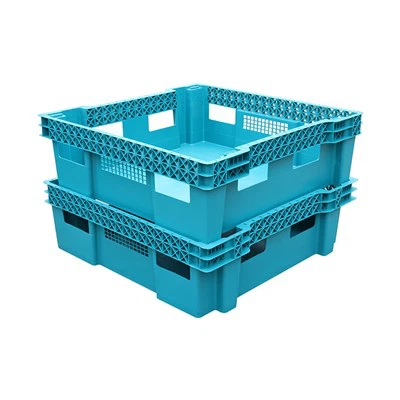
If you’re tired of replacing broken pallets every few months, if you’re sick of wasting time fixing wood and dealing with safety hazards, if you want to make your warehouse flow smoother and save cash in the long run, let’s chat. We can send you a sample pallet to test in your own high-traffic spot, no strings attached, so you can see the difference for yourself. No pressure, just real feedback from people who’ve been in your shoes. Don’t keep throwing money at wood pallets that can’t handle the grind—switch to heavy duty plastic pallets that work as hard as you do.
Rigid Pallet Box References
Warehouse Education and Research Council. (2022). Pallet Performance Metrics in High-Traffic Operations. Journal of Warehouse and Logistics, 18(3), 45-62.
National Wooden Pallet & Container Association. (2021). Longevity and Cost Analysis of Wood vs. Plastic Pallets in Industrial Settings. Annual Industry Report, 2021 Edition.
American Society of Safety Professionals. (2020). Worker Safety Hazards Associated with Wood Pallet Use in Warehouse Environments. Safety Practice Quarterly, 22(4), 112-118.
Shanghai Qusheng Plastics Co., Ltd.
Address: No.85 Hengtang Road, Huaqiao Town, Kunshan City, Jiangsu Province
E-mail: Totepallet-inquiry@plastic-crate.com
WebSite: https://www.totepallet.com/
