As a dedicated supplier of custom cooling fans, I’ve often received inquiries from clients about the best methods to measure the performance of these products. Measuring the performance of a custom cooling fan is not just about assessing its ability to move air; it’s a comprehensive evaluation that involves several key parameters. In this blog, I’ll share my insights on how to accurately measure the performance of a custom cooling fan, which will help you make informed decisions when choosing the right cooling solution for your specific needs. Custom Cooling Fan
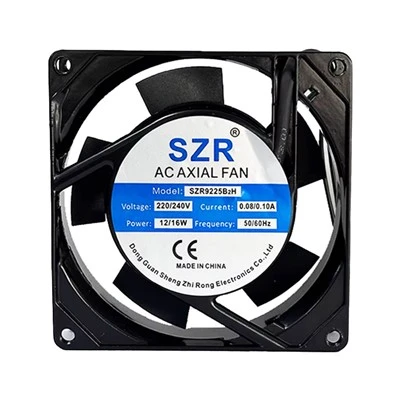
Airflow
Airflow is the most fundamental parameter when it comes to measuring the performance of a cooling fan. It refers to the volume of air that a fan can move in a given period, typically measured in cubic feet per minute (CFM) or cubic meters per hour (m³/h). A higher airflow indicates that the fan can transfer more heat away from the source, making it more effective at cooling.
To measure the airflow of a custom cooling fan, you can use an airflow meter. There are different types of airflow meters available, such as anemometers and pitot tubes. An anemometer measures the speed of the air, and by multiplying the airspeed by the cross – sectional area of the fan’s outlet, you can calculate the airflow. A pitot tube, on the other hand, measures the pressure difference between the static and dynamic pressures of the air, which can also be used to determine the airflow.
When conducting airflow measurements, it’s crucial to ensure that the fan is operating in a controlled environment. Any obstructions or irregularities in the airflow path can significantly affect the measurement results. Additionally, the fan should be running at a stable speed, as fluctuations in the speed can lead to inaccurate airflow readings.
Static Pressure
Static pressure is another critical factor in evaluating the performance of a custom cooling fan. It represents the resistance that the fan can overcome to move air through a system, such as a heat sink or a duct. Static pressure is measured in units of inches of water column (inH₂O) or pascals (Pa).
In some applications, such as in a computer case with multiple components or in a ventilation system with long ducts, the fan needs to generate enough static pressure to push the air through the restricted spaces. A fan with high static pressure can maintain a consistent airflow even when faced with significant resistance.
To measure the static pressure of a custom cooling fan, you can use a pressure sensor. The sensor is typically placed at the fan’s outlet or in the system where the air is being forced through. The pressure difference between the inlet and the outlet of the fan or the system is then measured to determine the static pressure.
It’s important to note that there is an inverse relationship between airflow and static pressure. As the static pressure increases, the airflow of the fan tends to decrease. This is because the fan has to work harder to overcome the resistance, which reduces its ability to move a large volume of air. Therefore, when selecting a custom cooling fan, you need to find a balance between airflow and static pressure based on your specific application requirements.
Fan Efficiency
Fan efficiency is a measure of how effectively a fan converts electrical energy into mechanical energy to move air. It is expressed as a percentage and is calculated by dividing the power output (related to the airflow and static pressure) by the power input (the electrical power consumed by the fan).
A more efficient fan consumes less electricity while providing the same or better cooling performance. This not only helps to reduce energy costs but also minimizes heat generation from the fan itself.
To measure the efficiency of a custom cooling fan, you need to measure both the power input and the power output. The power input can be measured using a watt – meter, which is connected to the fan’s power supply. The power output is related to the airflow and static pressure, and can be calculated using the following formula:
[Power\ output=\frac{Airflow\times Static\ pressure}{6356}] (when airflow is in CFM and static pressure is in inH₂O)
The efficiency of the fan is then given by:
[Efficiency=\frac{Power\ output}{Power\ input}\times100%]
Noise Level
Noise level is an important consideration, especially in applications where a quiet environment is required, such as in home electronics or office equipment. The noise generated by a cooling fan is typically measured in decibels (dB).
There are several factors that can affect the noise level of a custom cooling fan, including the fan’s design, the speed of rotation, the quality of the bearings, and the presence of any vibrations. A well – designed fan with high – quality components and proper balancing can operate more quietly.
To measure the noise level of a cooling fan, you can use a sound level meter. The meter should be placed at a specific distance and angle from the fan, as specified in the relevant standards. It’s also important to measure the noise level in a quiet environment to minimize background noise interference.
Speed and Control
The speed of a custom cooling fan is another key performance indicator. The speed is usually measured in revolutions per minute (RPM). A higher RPM generally means higher airflow and static pressure, but it also results in increased noise and power consumption.
Many modern custom cooling fans are equipped with speed control features, such as pulse – width modulation (PWM). PWM allows the fan speed to be adjusted based on the temperature or other environmental conditions. This not only helps to optimize the cooling performance but also reduces noise and energy consumption.
To measure the fan speed, you can use an optical tachometer or a magnetic tachometer. An optical tachometer uses a light source and a sensor to detect the rotation of a marked part on the fan blade, while a magnetic tachometer detects the magnetic field changes caused by the rotation of a magnet on the fan.
Temperature Reduction
Ultimately, the most important measure of a custom cooling fan’s performance is its ability to reduce the temperature of the target component or system. You can use temperature sensors, such as thermocouples or thermistors, to measure the temperature before and after the fan is installed and operating.
By comparing the temperature readings, you can determine how effectively the fan is removing heat from the source. It’s important to conduct these temperature measurements over a sufficient period to ensure that the system has reached a stable thermal state.
Conclusion
Measuring the performance of a custom cooling fan involves a comprehensive evaluation of multiple parameters, including airflow, static pressure, efficiency, noise level, speed, and temperature reduction. By carefully considering these factors, you can select the most suitable custom cooling fan for your specific application.
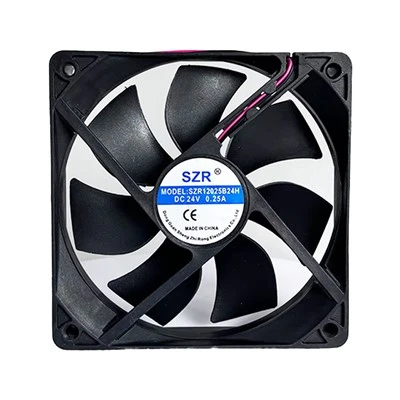
As a supplier of custom cooling fans, I understand the importance of providing high – quality products that meet the diverse needs of our customers. Whether you need a fan with high airflow for a large – scale industrial application or a quiet and efficient fan for a consumer electronics device, we can offer customized solutions tailored to your requirements.
EC Fan If you are in the market for custom cooling fans and would like to discuss your specific needs, please don’t hesitate to contact us. Our team of experts is ready to provide you with professional advice and support to help you make the best choice. We look forward to the opportunity to work with you and provide you with top – notch cooling solutions.
References
- ASHRAE Handbook – Fundamentals. American Society of Heating, Refrigerating and Air – Conditioning Engineers.
- Cooling Fan Design and Application Guide. Various industry – specific publications.
- Standards for Fan Performance Testing. International Organization for Standardization (ISO).
Dongguan Shengzhirong Electronics Co., Ltd.
As one of the most professional custom cooling fan manufacturers and suppliers in China, our products have good reputation in the market. Please rest assured to wholesale high quality custom cooling fan made in China here from our factory. Customized orders are welcome.
Address: 6/F, Building 2, No.68, Shunxing 2nd Road, Dajingtou 2nd Industrial Zone, Dalang Town, Dongguan City, Guangdong, China
E-mail: szr_coolingfan@163.com
WebSite: https://www.szrfan.com/
